Why Are Plus Size Clothes More Expensive?
Plus size clothing typically costs 10% to 15% more than identical straight-size items. Brands cite additional fabric and pattern grading costs. Researchers say the markup exceeds the actual cost difference.
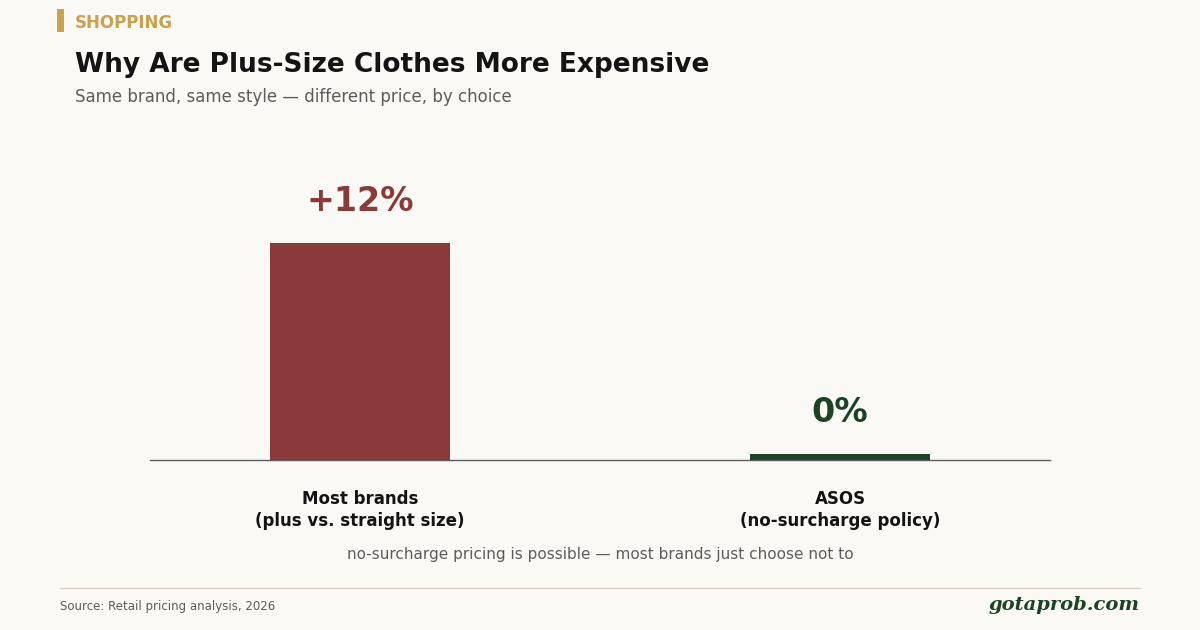
Plus size clothing typically costs 10% to 15% more than comparable straight-size items from the same brand, according to a pricing analysis by Refinery29 that compared identical or near-identical items across multiple major retailers. The most cited justification from brands is additional material costs and the complexity of pattern grading, the process of adjusting a garment's proportions as it scales across sizes.
Both factors are real. Neither fully explains the markup.
What brands say
The industry's standard explanation involves three cost drivers:
More fabric. A size 18 garment uses measurably more fabric than a size 6. For natural fibres like cotton and linen, this adds real material cost. For synthetic fabrics with lower per-yard costs, the additional fabric cost is smaller but still present.
Pattern grading complexity. Grading a pattern from a straight size to a plus size is not a linear scaling process. Proportions change, a size 20 garment cannot simply be a size 2 with everything enlarged uniformly. Armholes, waistlines, and bust proportions must be redrawn for each size range, requiring additional design and production work.
Smaller production runs. Many brands produce plus-size styles in smaller quantities than their straight-size equivalents, which increases per-unit production costs because large orders receive lower wholesale pricing.
Stay curious
One problem,
every Tuesday.
The most interesting problem of the week, straight to your inbox.
No spam. Unsubscribe anytime.
What researchers and critics say
The fabric cost argument does not account for the full magnitude of the typical markup. ThredUp's 2024 resale report found that plus-size items frequently resell at lower prices than straight-size items, which suggests the original retail premium is not driven by underlying value.
A 2023 study published in the Journal of Retailing found that the price differential between plus and straight sizes in US fashion retail exceeds what material and production cost differences would justify, particularly for stretch fabrics where the per-unit material cost difference between sizes is small. The researchers concluded that market segmentation, treating plus-size shoppers as a distinct, less price-sensitive market willing to pay more for access, is a contributing factor alongside genuine production costs.
The same brand, different prices
The pricing disparity is most visible when comparing items within the same brand. Lane Bryant, Torrid, and other plus-size specialists do not face the same comparison because they only serve plus sizes. But at brands that serve both size ranges, ASOS, Target, and some fast fashion retailers, identical styles listed separately for straight and plus sizes show price differences that directly illustrate the upcharge.
ASOS has notably maintained a no-surcharge policy for plus sizes, pricing extended sizes identically to their straight-size equivalents. The company has cited this as a deliberate equity position rather than a competitive advantage, suggesting the policy requires absorbing costs that other brands pass through to consumers.
The disappearing inventory problem makes it worse
As established in gotaprob's analysis of the plus-size retail pullback, Target's extended size inventory fell 37% between March 2025 and March 2026, according to retail intelligence firm EDITED. When mainstream retailers reduce plus-size availability, shoppers are pushed toward specialist plus-size retailers, which face higher operational costs as single-segment businesses and price accordingly.
Reduced competition in the market for any specific body type allows higher pricing to persist. The combination of a premium for plus sizing and reduced choice in where to find it means plus-size shoppers pay more while having fewer options than straight-size shoppers in the same price bracket.
For the full breakdown, read the complete gotaprob analysis: Plus Size Clothing Is Disappearing From Stores While the Market It Serves Keeps Growing.
Sources
- Refinery29 — Plus Size Clothing Price Analysis, 10-15% markup comparison across major retailers — https://www.refinery29.com/en-us/plus-size-clothing-more-expensive
- ThredUp — 2024 Resale Report, plus-size resale pricing compared to straight sizes — https://www.thredup.com/resale-report/
- ScienceDirect — Journal of Retailing, plus-size pricing study finding markup exceeds cost differences — https://www.sciencedirect.com/journal/journal-of-retailing
Go deeper
Plus Size Clothing Is Disappearing From Stores While the Market It Serves Keeps Growing