How Do Seniors Lose Money to Scams?
Americans over 60 reported $4.9 billion in losses to fraud in 2024, up 43% from the year before. Here are the most common scam types targeting seniors and why they work.
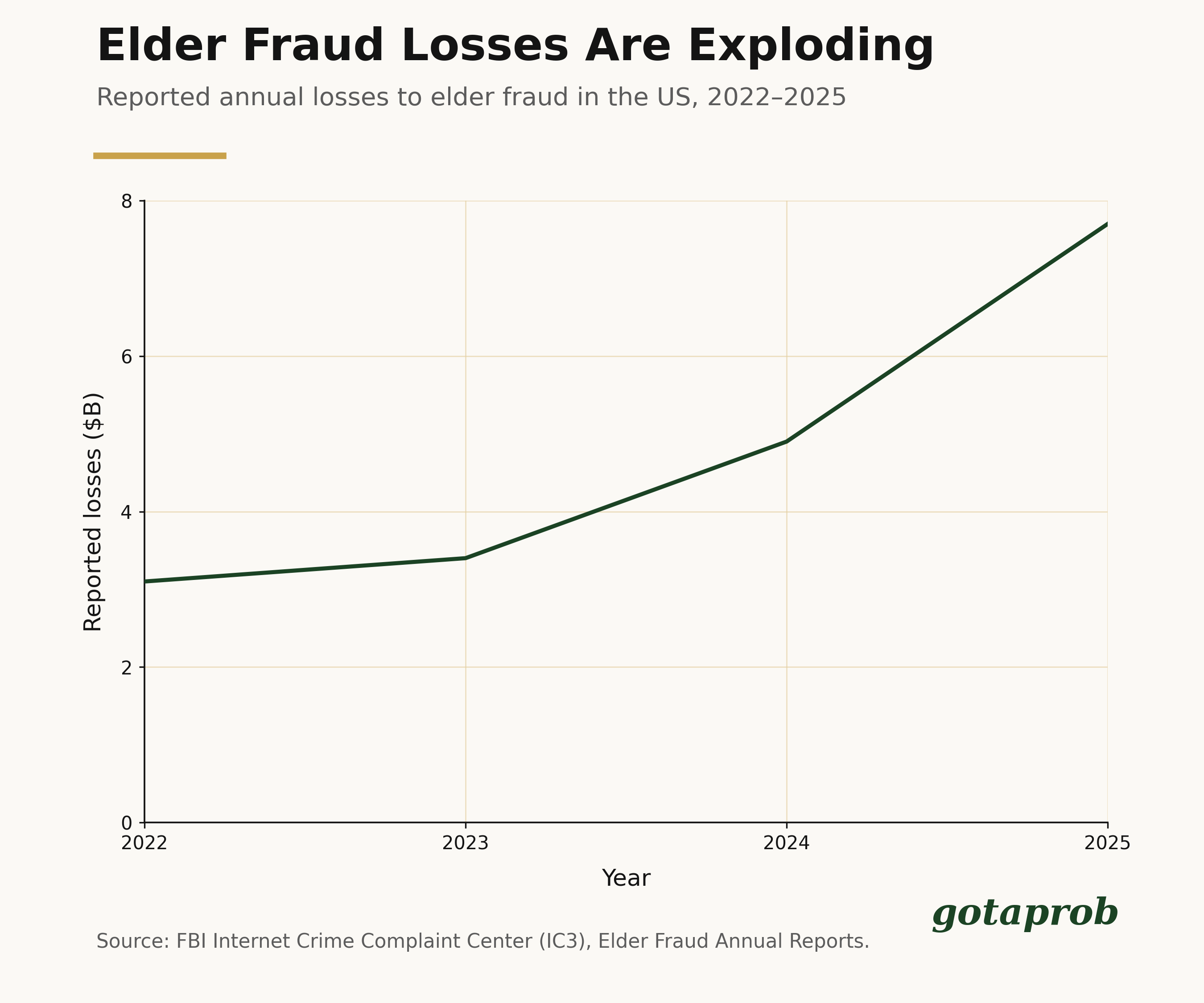
Americans over 60 reported $4.9 billion in losses to fraud in 2024, a 43% increase over 2023, according to the FBI's 2024 Internet Crime Report as reported by AARP. More than 147,000 victims over 60 filed complaints with the FBI's Internet Crime Complaint Center that year. These are reported cases only. The FBI notes that elder fraud is underreported because of shame, confusion, and a lack of awareness that a crime occurred.
The most common scam types
The FBI's data identifies the methods that produce the most financial harm:
- Investment scams: the largest category by far, with $1.8 billion in reported losses from people over 60 in 2024. Crypto investment fraud dominates this category, often initiated through social media or dating apps where trust is built over weeks before any money changes hands.
- Tech support scams: a caller or pop-up claims the victim's computer has a virus and charges hundreds or thousands of dollars to fix a problem that does not exist. Reported losses in this category reached $982 million in 2024.
- Romance and confidence scams: long-term emotional relationships built online that eventually result in requests for money. These produce some of the highest individual losses because victims have developed real trust before any request is made. Reported losses reached $389 million in 2024.
- Government impersonation: callers claim to be from the IRS, Social Security Administration, or Medicare and demand immediate payment to avoid arrest or loss of benefits.
- Grandparent scams: a caller claims to be a grandchild in legal or medical trouble and begs the victim not to tell other family members while sending money urgently.
- Lottery and sweepstakes fraud: victims are told they've won a prize but must pay taxes or fees upfront to claim it.
Stay curious
One problem,
every Tuesday.
The most interesting problem of the week, straight to your inbox.
No spam. Unsubscribe anytime.
Why the scams work
The scams work because they are sophisticated, they create urgency that bypasses careful thinking, and they specifically tell victims not to tell family members, which removes the most natural protection. They also exploit trust: impersonating banks, government agencies, and healthcare providers only works because people trust those institutions.
Recovery is hard
Wire transfers and cryptocurrency, the two payment methods scammers most often demand, are nearly impossible to reverse once completed. Victims who are embarrassed or confused often wait months before reporting, and by then the window for recovery has usually closed.
For the full breakdown of why families have almost no way to detect elder fraud before the money is gone, read the complete gotaprob analysis: Elderly People Lose $7.7 Billion to Scams Every Year and Their Families Have Almost No Way to Know It Is Happening.
Sources
- FBI Internet Crime Complaint Center, 2024 Internet Crime Report, adults 60 and over — via AARP Fraud Watch Network, "FBI: Older Fraud Victims Lost $4.9 Billion in 2024" — https://www.aarp.org/money/scams-fraud/fbi-report-fraud-2024/
Go deeper
Elderly people lose $7.7 billion to scams every year and their families have almost no way to know it is happening until the money is gone